Spotlight on Nursing Leadership: Dr. Natasha Prodan-Bhalla
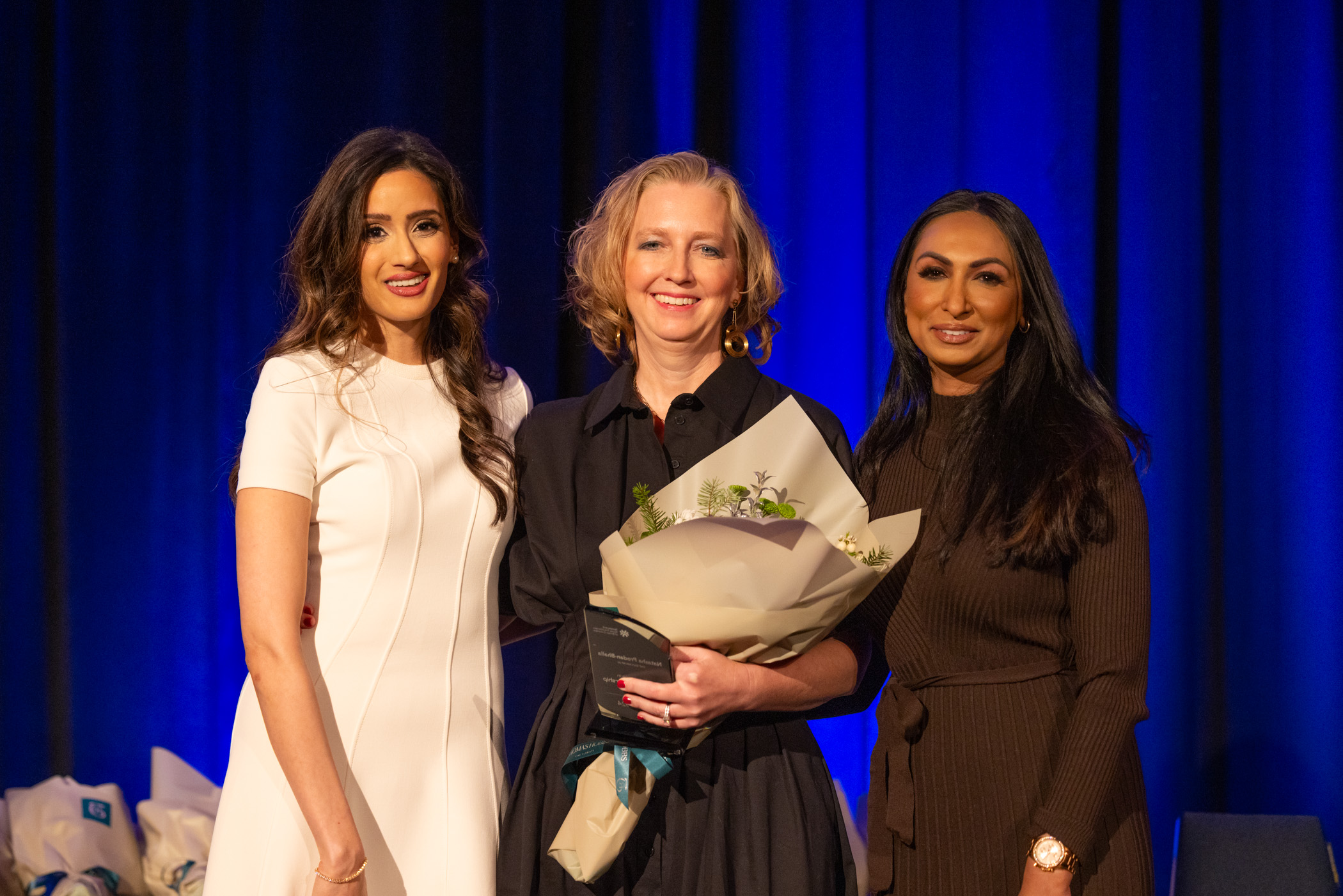
As part of a series celebrating last year’s Nursing Awards recipients, we’re sharing stories that highlight the inspiring achievements and impact of nurses and nurse practitioners across BC.
Q&A with Dr. Natasha Prodan-Bhalla
For the 2024 Nursing Awards, Dr. Natasha Prodan-Bhalla, DNP, BScN, MN, NP(A), Vice President, Quality, Safety, Clinical Informatics, and Chief of Nursing and Allied Practice at the Provincial Health Services Authority (PHSA), was recognized with the Excellence in Nursing Leadership Award. Dr. Prodan-Bhalla’s career has been defined by her dedication to advancing nursing leadership, shaping policy, and improving healthcare delivery across British Columbia. From her early work establishing the first independent NP contract to leading provincial policy initiatives, she has continuously demonstrated the power of nursing voices at the decision-making table.
We asked Natasha a few questions about her journey, inspirations, and advice for the next generation of nursing leaders.
Q: What inspired you to pursue the work or initiative that led to this award?
If nurses don’t step into leadership roles, it is difficult for us to be represented at the right tables. My inspiration was really wanting the system to improve with nurses providing a leadership role in the conversation.
Q: How has your work made a difference for patients, communities, or the nursing profession?
My policy work with the BCNPA (now NNPBC) helped to establish a vision for NPs in the province in both primary and speciality care. My work in the Ministry of Health established NP Led Clinic in the PCN framework and RN prescribing, increasing access to OAT prescribing for thousands of patients across the province.
Q: What challenges did you face, and how did you overcome them?
Numerous. There is a hierarchy in health care that has improved over my career but still exists and as a nursing leader I faced many obstacles related to this; being invited to the table, having power and authority over decision making that affected nurses and Nurse Practitioners. And advocating for a small profession like Nurse Practitioners limits your ability to move things forward such as legislation, regulation, and funding. Being a female leader in a female dominated profession also has had numerous implications and barriers for me over the course of my career; again, improving, but still a barrier.
Q: What’s one insight, lesson, or piece of advice you’d share with other nurses?
Keep your doors open; say yes even when it wasn’t what you had envisioned as opportunity may not come along again.
Q: What keeps you motivated or hopeful about the future of nursing? Alternatively, what change would you most like to see in the future of healthcare?
I think AI, automation, and effectively utilizing digital health tools all hold a lot of potential for the nursing profession. We are often drowning in paperwork, tasks that can be done another professional or non-professional group, and electronic health records that add workload rather than reduce. I think harnessing these areas to benefit the profession has huge implications.
Q: What role does mentorship or collaboration play in your work?
Throughout my career I have had both informal and formal mentors and would encourage this. One of my favourite parts of my role now is being able to provide mentorship- I’ve had a very rich and rewarding career to date and anything that I’ve learned that another nurse can benefit from is very rewarding and meaningful.
Q: Is there a moment or story from your journey that stands out as especially meaningful?
I think implementing the first NP role in BC in Cardiac Surgery at St. Paul’s Hospital. I had come from Ontario and spent the first year in my Advanced Practice Nursing role articulating what an NP was and how it could be of benefit but then realized that until I was able to action it, it was hard for people to understand so I had to figure out a way to implement without regulation that was safe and worked for everyone. Once I was able to do this and work as an NP, everyone understood clearly the value to the post-op patient. After that my mantra became more of a Just Do It philosophy rather than a discuss and wait for everyone to line up. The second story would be about the Policy White papers I wrote for the MOH articulating a vision for NPs after we realized there wasn’t really a voice for NPs in the MOH. When the timing was right, the MOH developed a leadership role for NPs and reached out to me. So it was an example of not knowing where your work is going to end up and then being in the right place at the right time and taking those opportunities that I outlined [prior].
Dr. Natasha Prodan-Bhalla
Dr. Natasha Prodan-Bhalla’s career exemplifies the impact of strong nursing leadership. Through policy innovation, mentorship, and strategic vision, she has advanced the profession, expanded access to care, and created opportunities for nurses to influence health systems. Her work demonstrates how nurses at the leadership table can drive meaningful change for patients, communities, and the profession as a whole.
2026 Nursing Awards
Nominations for the 2026 Nursing Awards are now open! The purpose of the Nursing Awards is to celebrate the many achievements of nursing professionals and the impact of these contributions on health and wellness. Nurses and nurse practitioners of all four designations are eligible for all awards and may self-nominate or be nominated by colleagues.